

Elizabeth Wilkins, LMFT-S, LPC, BCN, BCB
Amber came to me with a very specific issue. She wanted to be able to experience intimacy with her husband without the feeling of disgust which often appeared for no discernable reason. “It’s like I am repulsed when he’s not doing anything inherently off-putting. I want to be present and engaged, but I can’t stop these feelings from interrupting and pulling me away.” I led Amber through the Accelerated Resolution Therapy (ART) protocol where we were able to identify an incident that happened 25 years earlier that she hadn’t thought about in almost as long. Her feelings of disgust were rooted in this unresolved childhood experience of forced intimate contact from what should have been a trusted, harmless adult. Once we found the source of the issue, we continued on with the protocol, which uses a series of relaxing eye movements and a technique called Voluntary Image Replacement. Within a one-hour session, we were able to resolve this issue completely. I followed up with Amber a few weeks later, and the results were not only profound, but lasting. “The feeling is completely gone. I feel like I can receive affection as loving instead of threatening,” she reported. Amber’s experience is not unique–in fact she is just one of the many individuals in my practice who has experienced the power of ART. So many of my patients have experienced lasting, meaningful change, that I believe nearly anyone can benefit from this form of therapeutic intervention.
Simple and Effective
The beauty of ART lies in its simplicity. If you can move your eyes back and forth without pain, and if you can hold a thought, you are a good candidate for ART. Unlike other forms of talk therapy, the protocol does not require the client to recount the trauma or memory in excruciating detail. All the therapist needs is a snippet of information in case the client gets stuck. Otherwise, the client can move through the protocol with the therapist knowing little to nothing about the traumatic or uncomfortable details. Clients may experience some initial discomfort when visualizing the memory, but we move through it fairly quickly. The first time is the hardest, and everything gets easier from there. Once we walk a client through the protocol, the original scene or memory will still be there, but the emotional impact or trigger loosens its hold immediately, allowing the client to find much needed relief. While some situations will require an extended series of sessions, most issues are resolved in as few as 1-5 sessions. To many people who experience ART for the first time, it feels too good to be true. But it’s not. It’s actually simple neuroscience: The brain works in a way that is not dissimilar to a filing cabinet. During ART, we pull the problematic memory out of the brain’s “Fight/Flight/Freeze” filing cabinet. The therapy allows the brain to fully process the memory, which then allows us to re-file it in long-term storage where it holds less power over your day-to-day life. Once there, these memories will feel less intense or even get fuzzier. The brain holds onto detail that it views as dangerous. Once you have pulled out the intensity, it can be like any other memory.
While Root Issues Vary, the Results Do Not
“Hot damn. Where were you three wives ago?!” Vietnam Veteran after experiencing ART ART assists in navigating complex trauma and PTSD, while also serving as an impactful tool for other issues ranging from annoying to debilitating. For example, a patient of mine was struggling to manage an airplane phobia. The panic attacks she experienced made the cross country flights debilitating. After two sessions of ART, she was able to not only navigate the flights without anxiety, but she was able to use public transportation and experience crowded, enclosed spaces with much greater ease. The benefits of ART feel no less satisfying to someone with an airplane or hospital phobia than to someone who is finally able to hold down a job after years of struggling with PTSD. What’s more, clients can experience relief after just one session. The reason this works so effectively comes from a combination of two dynamics happening simultaneously–consistency and creativity. At its core, ART follows a protocol, but during the session, a good therapist’s creativity and intuition can make the process sing. In other words, the process is static but the therapy experience is dynamic. This ability to customize elements of ART to fit the unique needs of my clients goes a long way to ensuring lasting impact.
Nearly Universally Beneficial
People may wonder if they are qualified for this form of therapy. To that question, my typical response is this: If you have any memory that causes your stomach to turn over when you think about it, you’re likely to benefit. If we define trauma as any situation in which you experienced a loss of choice or control, then the goal of ART is to empower you to regain that sense of control. While ART is not a cure–it will help almost everyone feel a release in a powerful and significant way. At the Tarnow Center for Self-Management, I offer both in-person and virtual ART sessions. To learn more about ART and its benefits, contact me at 713-621-9515 or This email address is being protected from spambots. You need JavaScript enabled to view it. to schedule an initial assessment.
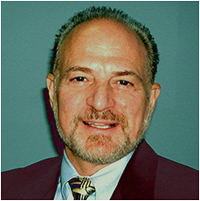
Board Eligible Neuropsychologist, Dr. O’Brien adds another dimension that rounds out our team. Neuropsychologists are a unique group of meticulous scientific testers, who are capable of defining specific areas in the brain that are malfunctioning. Dr. O’Brien possesses the added uniqueness of her pragmatic approach. She can move quickly from the academic data to what that really means for the person in their life. She is totally comfortable in the Self-Management model defining the skills necessary for individuals to be successful.
But what makes Dr. O’Brien very special is her ability to carry out treatment plans. While most Neuropsychologists are just testers, she creates detailed, problem-focused reports about what is needed and then goes about showing the patient how to change. She has the experience and skills to be especially helpful to patients with Neuroatypical development. She is also a gifted coach to assist adults with ADHD define the steps for implanting change. Her warm, humorous style makes it a pleasure to work with her.
With Dr. O’Brien’s experience in Neuropsychological Testing, we will be able to accurately define current Mental Status and develop the appropriate treatment plan going forward ¾ whether the problem is ADHD that is making the aging process more complicated or actual early stages of Dementia. In conjunction with a very skilled Neuroradiologist at Green Imaging, we will also conduct and analyze QEEG’s to see if brain circuits can be improved, or whether medications are needed. This combination of interventions will add greatly to our diagnostic acumen.
The Tarnow Center for Self-Management is now the “Brain Center” I have always dreamed of having. Our mix of personnel and methods to treat patients throughout the entire life cycle, including how to cope with concerns of developing adult onset of ADHD and/or Dementia, is the most comprehensive in Houston, and perhaps the state of Texas.
Dr. Jay D. Tarnow
Jay Tarnow, MD
Is the search for stimulation more rewarding than the reward? Slate Magazine’s Emily Yoffe has written an article suggesting that “seeking” stimulation, or anticipation of a payoff, is more rewarding than the reward itself. In 1954, James Olds attached electrodes to the lateral hypothalamus of rats and allowed rats to activate the electrode by pushing a small lever. He noticed that the rats would push on the lever repeatedly until they collapsed from exhaustion. Similar experiments done on humans (Heath, 1972; Portenoy et al., 1986) found that subjects elected to self-stimulation over other responsibilities, such as family commitments and hygiene.
While this area of the brain was then referred to as the “pleasure center”, later research has found that stimulation of the lateral hypothalamus actually produces the anticipation of pleasure, rather than pleasure itself. Kent Berridge makes the point that the brain is wired more for stimulation than satisfaction. Yoffe argues that this makes sense from an evolutionary standpoint. Those who are motivated to forage and find have a better shot at survival than do those who are easily satisfied.
Yoffe’s article goes on to share that the driving force behind this anticipation is the neurotransmitter dopamine. “Rats whose dopamine levels have been destroyed retain the ability to walk, chew, and swallow, but will starve to death even if food is right under their noses because they have lost the will to go get it.” Conversely, rats whose brains are flooded with dopamine are highly motivated to find the food, but do not find the food any more rewarding than rats with normal dopamine levels.
Given what we know about the connection between ADHD and decreased dopamine levels, this article presents three points that are highly relevant in regards to ADHD.
- Motivational difficulty with ADHD children and adolescents may in fact be due to the role that dopamine plays in anticipation of reward. If a child is not stimulated by the anticipation of a good grade, he is less likely to work for that grade.
- Anticipation of pleasure is no less stimulating for the ADHD child than the non-ADHD child, but it is harder to come by due to diminished dopamine levels. Therefore the ADHD child will be that much more drawn to activities that activate this arousal. This can result in the restlessness, impulsivity and impatience commonly seen in ADHD children. “This isn’t working, maybe that will…”
- Arguing is an example of an activity that does provide this high level of stimulation. Therefore, I encourage parents of ADHD children (or Bipolar, Oppositional, Tourette’s) to avoid arguing with the child. This doesn’t mean giving in; it means setting firm, clear boundaries that leave no room for argument.
In early 2013, the National Institute of Mental Health (NIMH) launched the Research Domain Criteria project (RDoC). This is an effort to evolve the symptoms-based diagnosis process to a more scientific-based process by incorporating a multidisciplinary approach that relies not only on symptoms, but also on genetics, neuroimaging, and cognitive science. This movement away from traditional categorization of the Diagnostic and Statistic Manual (DSM) is a necessary step to shift the focus toward identifying the underlying cause of the observed symptoms. The Tarnow Center began this shift in eight years prior.
Under the direction of Dr. Jay D. Tarnow the Center has always been on the leading edge of innovative approaches to mental health. In January 2005, Child and Adolescent Psychiatric Clinics of North America published a journal on "Emerging Interventions" dedicated to the current research in quantitative EEG (qEEG) technology and neurofeedback treatment. This convinced Dr. Tarnow to start a new program at the Center. He came to Dr. Ron Swatzyna and they developed a collaborative plan. By April, 2005, Dr. Swatzyna completed additional training in doing EEG/qEEGs and neurofeedback and the first study was done that month.
Drs. Tarnow and Swatzyna realized early on that to be on the leading edge, they have to be supported by current research. So from the beginning, any recommendations for medication ot treatment were research based. In those first few years (2005-2009) the learning curve was steep. Dr. Tarnow found the EEG and qEEG results most helpful when treating those on multiple medications. In 2009, Dr. Swatzyna created an EEG/qEEG archival database in compliance with Institution Review Board (IRB) regulations. Each study since has been analyzed by an internationally renowned team.
Since April of 2009 every EEG has been read by neurophysiologist Dr. Meyer Proler. Meyer Proler, M.D. is a graduate of Baylor University, College of Medicine. Additionally, he is certified by the American EEG Society Board of Qualifications, as well as the American Board of Electroencephalography, with special competence in Quantified EEG. Dr. Proler has been a clinical assistant professor in the Department of Neurology at Baylor University for over 14 years and has had numerous scientific papers published.
The EEG data is also sent to a scientific team at the Human Brain Institute in Saint Petersburg, Russia to be quantified and compared to both the European and American (Dr. Robert Thatcher's Neuroguide) databases. Once the brain maps are made, they are analyzed by qEEG diplomate Jay Gunkelman. He is recognized as one of the top leaders in the field of EEG and QEEG, and has processed over 500,000 EEGs since 1972. Additionally he has conducted, published or participated in hundreds of research papers, articles, books and international meetings.
In 2013 Dr. Swatzyna assembled a team to study 386 clinical cases that had failed on at least two medication trials. The team included Dr. Tarnow, Dr. Vijayan Pillai (The University of Texas Arlington statistician) and Dr. Gerald Kozlowski (Saybrook University researcher). In 2014 they published their findings in two medical journals (referenced below).
Swatzyna, R.J., Kozlowski, G.P. & Tarnow, J.D. (2014). Pharmaco-EEG: A Study of Individualized Medicine in Clinical Practice. Clinical EEG and Neuroscience. Electronically published December, 2014.
Swatzyna, R.J., Tarnow, J.D., Tannous, J., Schieszler, C., Pillai, V.J. & Kozlowski, G.P. (2014). EEG/QEEG Technology Identifies Neurobiomarkers Critical to Medication Selection and Treatment: A Preliminary Study. Journal of Psychology and Clinical Psychiatry.
In 2014, the database contained 427 clinical cases with each having 380 variables. His "big data" database gained so much international attention that a distinguished researcher from Utrecht University the Netherlands, Dr. Martijn Arns requested the use for a particular study of interest. Dr. Arns formed a research team including Dr. Swatzyna, Dr. Sebastian Olbrich from the University of Munich and Jay Gunkelman. Their goal was to study one of the neurobiomarkers using a RDoC approach (reference below). This is the largest study, and one of the first, to be done in response to the NIMH request for research identifying neurobiological measures causing psychological symptoms.
Arns, M., Swatzyna, R.J., Gunkelman, J., & Olbrich, S. (pending publication 2015). Sleep Maintenance, Spindling Excessive Beta and Impulse Control: An RDoC Arousal and Regulatory Systems Approach? Neuropsychiatric Electrophysiology.
When Drs. Tarnow and Swatzyna started this effort ten years ago, they had no idea where it would lead. What they did not expect was that the same four findings (neurobiomarkers) would account for 99 percent of all medication failure cases. This was a very important finding because it:
- Explained why prior medications failed,
- Provided insight as to what class of medications would likely be more effective without adverse side effects
- Identified when medications would have limited effectiveness or should be avoided until more testing can be done.
The Tarnow Center had the distinction of being the first private practice in the United States to use scientific data to assist with medication and treatment selection. Using this data allows the clients to eliminate the “trial-and-error” method when it comes to medications. The results of the EEG/qEEG may help the psychiatrist choose a medication that will have less adverse side effects. This could not have been done without the collaboration of Dr. Swatzyna's research and Dr. Tarnow's clinical expertise. Because we are on the leading edge of research, we have to be very cognizant of our responsibility to provide research based, clinically correlated recommendations. This information is only useful under the direction and guidance of a psychiatrist with years of experience such as Dr. Tarnow.
© Copyright Tarnow Center for Self-Management® 2016

Navigating the turbulent waters of life’s numerous transitions can stir the undercurrents of obsessiveness, a trait often concealed behind the guise of diligence or meticulousness. Unlike Obsessive-Compulsive Disorder (OCD), which is a recognized psychiatric condition, obsessiveness can manifest within any individual, portraying itself particularly during times of stress or significant transitions. As a practicing psychologist, my journey has led me through the corridors of human emotions, unveiling the varying shades of obsessiveness across different age groups, markedly accentuated during pivotal life transitions such as transitioning to middle school, stepping into the collegiate sphere, embarking on a professional journey, embracing parenthood, or confronting job changes and interpersonal discord.
The Early Veil: Childhood to Adolescence
In the tender years of childhood, obsessiveness may cast a subtle veil through an excessive need for routine, order, or perfection. As children transition to middle school, this need might burgeon. A child might find themselves spending an inordinate amount of time organizing their backpack meticulously, driven by an ingrained fear of forgetting something vital. The whirlpool of puberty, peer pressure, and the burgeoning desire for social acceptance can further fuel these obsessive tendencies. The escalating need for control amidst a landscape of change often propels the engine of obsessiveness. Exemplifying this, a teenager might find themselves incessantly checking their social media, driven by a fear of missing out or a desire for social validation.
The Youthful Gust: Transition to College
With adolescence dovetailing into the realms of higher education, the leap to college often stokes the fires of obsessiveness further. The quest for academic perfection, overshadowing fear of failure, and the undulating pressure of forging new social connections can trigger an overwhelming emphasis on meticulous planning and perfectionism. For instance, a college freshman might find themselves spending excessive, often draining, hours on a single assignment, striving for elusive perfection, or harboring an overwhelming focus on maintaining an impeccable appearance to fit into newfound social circles.
The Adult Tide: Venturing into the Workforce and Parenthood
Transitioning into the professional arena or embracing the tender yet demanding realm of parenthood marks significant life milestones, often accompanied by a discernible spike in obsessiveness. The aspiring need to excel in a new job or the heart-driven desire to be a perfect parent can lead to an over-analysis of every minuscule decision. For example, a new parent might find themselves engrossed in an endless spiral of researching the best parenting strategies, while a new employee might dwell on every word uttered during an inaugural meeting, analyzing and re-analyzing their performance.
New Horizons: Navigating Job Changes and Interpersonal Disagreements
As individuals ascend the career ladder or navigate the often tumultuous waters of interpersonal disagreements, obsessiveness can manifest through an incessant need to prove oneself right or to maintain an unblemished reputation. The face of obsessiveness may unveil itself through over-preparing for presentations, endlessly rehashing conversations to dissect what went awry, or an overwhelming preoccupation with feedback and validation.
Coping and Thriving Amidst the Whirlpool of Obsessiveness
A profound understanding of the dynamics of obsessiveness and the triggers ensconced in life transitions is pivotal for fostering resilience and nurturing healthy coping mechanisms. Cognitive-behavioral techniques, mindfulness practices, and a robust support system can significantly mitigate the tendrils of obsessiveness, offering a sanctuary of balance amidst the storm.
Each life transition, laden with its unique bouquet of challenges, can either entangle us in the complex vines of obsessiveness or offer a golden pathway to cultivate resilience, self-awareness, and adaptability. By cradling a balanced perspective, seeking a haven of support, and adopting healthy coping strategies, we can navigate through life’s diverse tapestry with a fortified sense of self and a nurtured capacity for joy, satisfaction, and fulfillment. Through the lens of empathy, education, and empowerment, we can traverse through life’s manifold transitions, with obsessiveness in the rearview, steering towards a horizon adorned with hope, growth, and boundless potential.
For appointments, please call 713-621-9515, and ask for the Intake Coordinator.