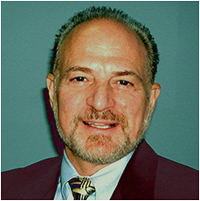
Jay D. Tarnow, M.D.
An article recently published in the New York Times titled Some with Autism Diagnosis Can Overcome Symptoms is a very important article to Our Center because this is what we believe. That these patients can be helped significantly and some in a major way. It takes a comprehensive treatment plan that looks at the BioPsychosocial interventions and a lot of hard work by parents doing the "right" things, not just pie in the sky interventions, but scientifically based, clinically sophisticated intervention.
We start with a comprehensive evaluation that is focused on which treatment interventions will be most effective. We use QEEG to assess the neurological dysfunction and send the data to a huge computer database of thouands of QEEGs. The results are analyzed by 2 experts, a Neurologist and Electroencephlographer as to which medications will work best on the brain. It takes all the years of guess work out of trying to select the correct medication for this specific individual. Then we do genetic testing to assess how that individual reacts to medication and how the medications will be metabolized.
Our unique, proprietary, specialized Neuropsychological Testing that has been developed over the past 25 years and utilized in thousands of patients gives a very clear understanding of the type of psychological, educational, social, and brain interventions which will be most effective. We then follow these patients closely, constantly assessing the effectiveness of our interventions. These children do change, and when they change, we want to be on top of the situation to intervene with what they need at that stage.
Many of the parents of Autistic Spectrum Disordered patients will jump from one clinician to another and from one intervention type (Nutritional, Allergist, Occupational Therapist, Neurologist, Applied Behavioral Analysis, Etc.) to another randomly or because they read an article or heard from another parent how their child was helped by this or that person. Our approach is "Continuity of Care". we follow and meet the needs of these children from toddler through adulthood. We oversee the care even when we refer to another program for specialized care we do not give at the Center. No stone is left unturned, but we coordinate it all and are constantly assessing the effectiveness of each step. THIS IS THE TARNOW CENTER FOR SELF-MANAGEMENT WAY!
Some with Autism Diagnosis Can Overcome Symptoms By Benedict Carey Published January 16, 2013

Two weeks ago Dr. Swatzyna presented his latest research at the World Psychiatric Association XVII World Congress of Psychiatry in Berlin, Germany where over 10,300 doctors were in attendance. Dr. Ron joined three other experts to host a discussion called “The Integration of Resting State EEG in Psychiatric Clinical Practice: Past, Present, and Future Development.” During this conference, Dr. Ron discussed the insights that EEGs have provided over the last 14 years treating children with autism.
Since Dr. Ron joined the Tarnow Center, it has been his goal to bring EEGs back into psychiatry. Unknown to many, Hanz Berger, who developed the electroencephalogram in 1925, was actually a psychiatrist. However, over the years EEG has been underutilized in psychiatry and more commonly associated with the field of neurology. Dr. Tarnow and Dr. Ron have worked had to show its ability to help guide medication selection and avoid medications that would have terrible side effects for their patients.
Since 2014, Dr. Ron has published 12 peer-reviewed papers with the help of Dr. Tarnow, his research assistants, and other collaborating colleagues. His current paper “EEG for Children with Autism Spectrum Disorder: Evidential Considerations for Routine Screening” was just accepted by the BMC Neurology Journal.
Recently, Dr. Ron has been collaborating with Dr. Grossi in Lake Como, Italy on a paper titled: “Diagnosis of Autism through EEG Processed by Advanced Computational Algorithms: A Pilot Study.” Together they seek to create new ways to treat and diagnose children with autism. This study works in the field of artificial intelligence, aimed at discovering and experimenting with new mathematical models and algorithms for diagnosis. They are very excited about the preliminary results and last week they submitted an abstract to a conference in 2018.
Dr. Ron is determined to change the current psychiatric practice guidelines to support EEGs for children with autism prior to medication. Interested in learning more about the research our clincians are participating in? Check out the published articles rack in the lobby.
According to the CDC, infertility will impact 10 percent of women in the United States, which means that at least 6.1 million women will struggle to achieve pregnancy or sustain pregnancy. However, it is important to understand that infertility is not just a women’s problem. While one third of infertility cases result from women’s problems, one third of cases result from problems with the man. Another third of these cases result from some combination of male and female problems or from completely unknown causes.
When couples decide to start a family and actively begin trying to conceive, the expectation is often that pregnancy will be achieved easily. However, when a woman does not become pregnant within one year of actively trying, or six months of trying if she is over the age of 35, infertility is diagnosed and must be explored further.
As these difficulties emerge, couples often report feeling anxious, depressed, angry, or socially isolated. Marital problems and sexual dysfunctions can arise, which only interferes further with attempts at getting pregnant. Research has shown that infertility can certainly impact mental health; and mental health issues, such as significant distress, can affect a woman’s hormone balance and even ovulation, again making pregnancy even harder to achieve.
Many couples who struggle with infertility will use fertility medications, attempt procedures such as intrauterine insemination (IUI), or even turn to assisted reproductive treatments (ART) such as in vitro fertilization (IVF). In some cases, couples will choose to use a gestational carrier so that their children may be genetically related to one or both parents. Some couples choose to adopt children, while others eventually decide that they will not have children of their own. Many of these alternatives are quite costly; and they are not typically covered by most insurance policies. Financial strain can weigh heavily on a couple who struggles to decide if they can afford to continue trying to have a family. Additionally, research has confirmed the negative psychological impact of infertility and ART. Anxiety, depression, and distress often increase when couples undergo such procedures and treatment failures typically exacerbate such symptoms. Furthermore, we cannot ignore the psychological impact of medications often used as a primary treatment for infertility or even as an adjunct to other treatments. Finally, it is important to understand that pregnancy loss is, unfortunately, often a part of a couple’s struggles with infertility.
Ultimately, infertility treatment may become an emotional rollercoaster where couples become extremely focused on achieving pregnancy. Becoming pregnant may take precedence over all other areas of life. Individuals may experience times of hopefulness, fears about side effects or pain of procedures, anxiety as they wait to see if treatments worked, excitement if results are positive, and/or severe sadness, depression, or grief if pregnancy is not achieved or if miscarriages occur. Furthermore, for the couple who is struggling with infertility, it is sometimes quite painful and conflicting emotions often arise when other friends or family members become pregnant, achieving the one thing they desire so greatly but cannot obtain.
Overall, infertility has a profound impact on women and men who desire to form a family of their own. Infertility has been described as a transformational process where women often must mourn the loss of “normal” reproductive function, making restitution with the perceived social stigma and powerlessness they feel as they are unable to fulfill familial and societal norms. Individuals often feel excluded from the rituals of parenthood and denied the hope of having genetic ties to descendants. Intimate relationships are often altered as individuals may feel guilty about denying their partner a child. Consequently, a grieving process must occur and social support is tremendously important.
Studies have shown that psychotherapy (for individuals, couples, or in group settings) can be effective in alleviating the anxiety, depression, or distress associated with infertility. Also, a 2009 meta-analysis found that psychological interventions targeting such symptoms could actually improve some patient’s chances of becoming pregnant. In fact, many reproductive specialists are now including psychological interventions in their treatment plans for infertile couples and psychotherapy is often encouraged.

Lynn Ayres, M.Ed.
The Tarnow Center is excited to be offering a new program to help your child reach their full potential. STRONGER BRAINS offers a fundamentally different approach to addressing children who are struggling with learning, behavioral, or social difficulties.
SCIENTIFIC APPROACH
STRONGER BRAINS is a scientific-based program developed by Dr. Michael Merzenich, a world-renowned neuroscientist who is a pioneer of brain plasticity research. Brain Plasticity refers to the brain's ability to adapt responses to experiences and environments. Our brains are constantly changing, developing, and are shaped by our sensory input and social interactions. Dr. Merzenich’s research on brain plasticity has shown that targeted and intensive training can promote positive neurological changes in children leading to improved cognitive function, better academic performance, and even increase self-esteem, emotional regulation, and overall mental wellness.
STRONGER BRAINS provides an online platform for children to engage in fun and challenging activities that are designed to stimulate brain plasticity and to enhance neurocognitive abilities while strengthening emotional control, self-regulation, positive self-image, and a growth mindset.
RESEARCH OUTCOMES
The brain-plasticity-based training exercises on STRONGER BRAINS were rigorously designed and evaluated by 200 peer-reviewed studies that demonstrate their positive impacts on individuals with cognitive and mental health challenges, as well as the general population.
After completing STRONGER BRAINS, children showed significant improvements in a range of key cognitive skills, including attention, working memory, processing speed, and executive control. 56% of children identified as at risk for mental health challenges were no longer at risk after using STRONGER BRAINS. 80% of children showed overall positive gains in behavioral regulation and resilience.
WHO IT CAN HELP
- Children – ages 10-22 struggling to find academic or social success
- Children with –
- ADHD
- Executive Function Disorder
- Autism
- Social / Emotional Difficulties
- Slow visual or auditory processing
HOW IT WORKS
- 40 – 60 sessions completed online (35 – 45 minutes each)
- 3 – 5 sessions per week
- 8 – 12 weeks
- Each session includes a combination of gamified cognitive skill-building and social-emotional health focused exercises.
- Brain training
- Self-regulation
- Brain health evaluation
- Mind-body scan
HOW TO ENROLL OR FOR MORE INFORMATION
Contact Lynn Ayres – 713 – 621 – 9515
Email - This email address is being protected from spambots. You need JavaScript enabled to view it.
A learning disability may be defined as an individual not being able to perform at his/her potential level of functioning. Often academic difficulties are attributed to poor motivation. We have all heard comments like, “If he only cared more, tried harder.” If we stop to think why someone who is proud of his/her achievements, and values the praise of teachers and parents would choose the punishing path of failure, it would make no sense. Lack of motivation often reflects an individual’s attempt to avoid failure and consequent anxiety. It is easier to be thought of as someone who will not, rather than someone who cannot. In spite of attempts to learn and do well, poor results ensue. It is no wonder that the individual begins to doubt his own judgment and ability. Some of the challenges that can impact learning and success in school are a student’s proficiency or deficiency in the following skills:
- Attention - It should be determined whether an attention deficit disorder is interfering with the acquisition of information or the ability to demonstrate what has been learned. Learning disabilities can occur with or without ADHD. ADHD results in incomplete learning. It is easy to forget what has only been partially learned. Inconsistent performance results lead teachers to make comments such as, “I know he can do it when he tries.”
- Cognitive Skills - Successful learning depends on many cognitive abilities working together. Information must be received and understood, integrated and then expressed in a way that demonstrates the learning that has occurred. Interference with this process at any level can result in academic failure. The evaluation process must identify where the interference occurs.
- Visual and Auditory Processing - Learning occurs through all of our senses, but in the classroom, we depend primarily on our visual and auditory processing. Hearing and vision should always be tested to rule out poor acuity. Visual perception and visual motor skills are important in the development of academic abilities, and must be evaluated during the assessment of school failure.
- Language - Oral language skills cannot be emphasized enough as a contributing factor to the success or failure in the classroom. Whether language arts or mathematics is being taught, instruction occurs through the spoken word. Poor oral language skills results in poor written language skills. Language is a complicated symbol system. Often, we think that because someone can converse fairly adequately, that the entire language system is intact. However, the language of the classroom is often more complicated. Language is divided into subsystems of sounds (phonology), grammar and syntax, vocabulary and meaning (semantics), and the ability to use language in different contexts (pragmatics). A break down in any one of these systems can result in significant difficulty being experienced in learning. Individuals with language disorders have difficulty processing sounds at the necessary speed. Pathways in the brain which allows this rapid processing have not been established. While this theoretical concept has been understood for some years, it has been difficult to remediate it effectively.
Students with ADHD or a learning disability have specific challenges that can impact learning and success in school. Their brains often lack connectivity, processing speed, timing, organization, and working memory skills. The more efficient the brain the more the student will benefit from conventional therapies. These students need to make functional changes to their brains so that they are ready to learn and reach their potential.
Brain Plasticity
The concept of brain plasticity (the ability of the brain to develop new pathways) continues to be the basis of the interventions provided at The Tarnow Center. We understand that increasing the brain’s ability to learn provides a basis for the acquisition of academic and social skills. We are able to provide a variety of techniques to assist students so they can be optimally successful in school and life. One of these techniques is the computer-based program Fast ForWord.
Based on more than 30 years of research, the Fast ForWord program accelerates learning for students across a wide spectrum of ages and abilities — including those working at, above or below grade level — by applying proven research on how the brain learns. By building cognitive skills in the areas of memory, attention, processing, and sequencing, learners can realize achievement gains of up to two years in as little as three months and maintain an accelerated rate of learning even after the programs end.
Scientific Learning’s results are demonstrated in over 250 research studies and protected by over 55 patents. Today, learners have used over 3 million Scientific Learning software products. The programs are available to parents, K-12 schools and learning centers, and are used in more than 40 countries around the world.
Summer is the best time for Learning
For students who are facing challenges, trying to address those challenges during the school year can prove very challenging. The amount of energy required just to handle daily pressures and meet regular schedules can make addressing deeper issues feel like an impossibility.
The summer, however, is easier. Children are out of school, their energies aren’t divided and neither are those of parents. This can be a golden opportunity to do some serious work on the serious challenges that are making school so problematic.