Are you ready to come out from isolation? Do you think you have lost any functions? Being in isolation may have affected your social skills or comfort. When I came out of isolation I was uncomfortable with crowds, wondering, is anyone around me a carrier of COVID? Why are people not wearing masks? Is it that they have had the vaccine? When exactly? I had to depend on and trust my neighbor, but, with all the news programs telling me there was a 30% group who refused to get vaccinated, whom could I trust? Should I ask everyone not masked if they were vaccinated? Would they be angry or insulted? Should I care? My life depends on the answer. How do I handle the unvaccinated? How close should I get to the vaccinated? Should I allow them to hug me, kiss me? So many questions and yet in public there is not much time to decide. These questions need to be thought about before going out into public. You are going to be confronted with these situations as you go outside your comfort zone.
Making an assessment of oneself is important. Check your cognitive skills. Were you specifically using all of them daily? Be honest. These will come back with stimulation and interaction. Be safe, not impulsive! Slowly return to your outside routines assessing your anxiety. Many people became depressed in isolation. Often, there is a worsening of underlying conditions. People with underlying conditions are more susceptible and less resilient. We are now seeing this group in treatment. However, we are also seeing people who developed Anxiety Disorders as a result of the isolation and pandemic. Many people are afraid to resume old activities. Some have lost family and friends and were not able to fully mourn because of the isolation. No funerals, and the inability to visit and support loved ones. Many felt guilty. Some felt survivor's guilt. Had they contributed in some way to someone getting sick, or caused someone to die? Were they not there for their relatives and friends?
Many people with anxiety started to have breathing problems as they made their way out of isolation. These made them fear COVID. Calming these fears with a COVID test help some depending on the severity of the anxiety. Often, these responded to reassurance and breathing meditations. Headspace App and Calming Breadth were particularly helpful. Sometimes I used CBD or Tryptophane instead of medication. When medication was needed, Buspar was quite effective. It has few side effects and is safe. If this did not work, then I went up to Alprazolam or Lorazepam. I did not use antipsychotics because it was not necessary and I did not want to increase somatic symptoms. When patients had longer problems, I then used an SSRI for the Obsessions and Compulsions.
Some people have gotten vaccinations and yet, still fear COVID. They show many of the signs of PTSD. The experiences were too much for them and overwhelmed their coping. Some who had COVID are long haulers with symptoms of severe lethargy, muscle aches, headaches, GI disturbance, cognitive impairment, sleep disturbances, depression, and anxiety. Recent research has shown that many responded to a vaccine. Others have responded to Vitamin D, Vitamin C, and B complex, while others have needed steroids.
At the Tarnow Center, we have assessed and treated these problems. We have used some easily accessible online cognitive tests, rating scales, and qEEG for more severe problems. The qEEG’s have been very helpful to define COVID’s effects on the brain-slowing areas. The use of Neurotherapy with a stimulation pattern has shown improvement.
However, a most important new treatment, ART (Accelerated Resolution Therapy), has been very helpful, if not miraculous, for my COVID PTSD cases. ART is a newer updated version of EMDR and is very helpful in people that could not use EMDR. It does not require verbalizations. The work is internal, thus, patients who are too scared or embarrassed to discuss their inner thoughts were more receptive to this treatment. It has shown success with children and adolescents. We have even been able to adapt this method for videoconferencing. This treatment method is excellent for those who are going back into the world feeling all the anxieties I mentioned above. We cannot allow our fears to retard our growth and development. Every age group can be affected, delaying development further. Parents need to be strong for their children since the child imitates them and experiences their anxiety.
I am most concerned about the effects of the Pandemic on children with Comorbid conditions such as ADHD, Anxiety Disorders, OCD, Depression, Learning Disorders, Autistic Spectrum Disorder, and Tourette’s Disorder. These children need our special attention as they move out into the world again. ART may be very helpful in decreasing their symptoms and restarting their developmental processes.
To be able to grow and thrive while exiting isolation, we should be self-aware, cater to our symptoms, and remain responsible; responsible for our own health, and for the health of the community. Be honest with yourself if you feel a psychological evaluation is necessary. It is okay to need help. The Tarnow Center provides many treatment options and is eager to help the community push towards healing.
Tarnow Center for Self-Management
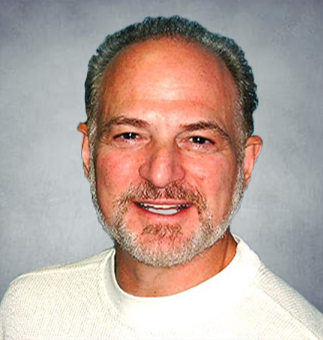
Jay D Tarnow, MD
Child, Adolescent, & Adult Psychiatrist
713.621.9515
Jay D. Tarnow, M.D.
Are you ready to come out from isolation? Do you think you have lost any functions? Being in isolation may have affected your social skills or comfort. When I came out of isolation I was uncomfortable with crowds, wondering, is anyone around me a carrier of COVID? Why are people not wearing masks? Is it that they have had the vaccine? When exactly? I had to depend on and trust my neighbor, but, with all the news programs telling me there was a 30% group who refused to get vaccinated, whom could I trust? Should I ask everyone not masked if they were vaccinated? Would they be angry or insulted? Should I care? My life depends on the answer. How do I handle the unvaccinated? How close should I get to the vaccinated? Should I allow them to hug me, kiss me? So many questions and yet in public there is not much time to decide. These questions need to be thought about before going out into public. You are going to be confronted with these situations as you go outside your comfort zone.
Making an assessment of oneself is important. Check your cognitive skills. Were you specifically using all of them daily? Be honest. These will come back with stimulation and interaction. Be safe, not impulsive! Slowly return to your outside routines assessing your anxiety. Many people became depressed in isolation. Often, there is a worsening of underlying conditions. People with underlying conditions are more susceptible and less resilient. We are now seeing this group in treatment. However, we are also seeing people who developed Anxiety Disorders as a result of the isolation and pandemic. Many people are afraid to resume old activities. Some have lost family and friends and were not able to fully mourn because of the isolation. No funerals, and the inability to visit and support loved ones. Many felt guilty. Some felt survivor's guilt. Had they contributed in some way to someone getting sick, or caused someone to die? Were they not there for their relatives and friends?
Many people with anxiety started to have breathing problems as they made their way out of isolation. These made them fear COVID. Calming these fears with a COVID test help some depending on the severity of the anxiety. Often, these responded to reassurance and breathing meditations. Headspace App and Calming Breadth were particularly helpful. Sometimes I used CBD or Tryptophane instead of medication. When medication was needed, Buspar was quite effective. It has few side effects and is safe. If this did not work, then I went up to Alprazolam or Lorazepam. I did not use antipsychotics because it was not necessary and I did not want to increase somatic symptoms. When patients had longer problems, I then used an SSRI for the Obsessions and Compulsions.
Some people have gotten vaccinations and yet, still fear COVID. They show many of the signs of PTSD. The experiences were too much for them and overwhelmed their coping. Some who had COVID are long haulers with symptoms of severe lethargy, muscle aches, headaches, GI disturbance, cognitive impairment, sleep disturbances, depression, and anxiety. Recent research has shown that many responded to a vaccine. Others have responded to Vitamin D, Vitamin C, and B complex, while others have needed steroids.
At the Tarnow Center, we have assessed and treated these problems. We have used some easily accessible online cognitive tests, rating scales, and qEEG for more severe problems. The qEEG’s have been very helpful to define COVID’s effects on the brain-slowing areas. The use of Neurotherapy with a stimulation pattern has shown improvement.
However, a most important new treatment, ART (Accelerated Resolution Therapy), has been very helpful, if not miraculous, for my COVID PTSD cases. ART is a newer updated version of EMDR and is very helpful in people that could not use EMDR. It does not require verbalizations. The work is internal, thus, patients who are too scared or embarrassed to discuss their inner thoughts were more receptive to this treatment. It has shown success with children and adolescents. We have even been able to adapt this method for videoconferencing. This treatment method is excellent for those who are going back into the world feeling all the anxieties I mentioned above. We cannot allow our fears to retard our growth and development. Every age group can be affected, delaying development further. Parents need to be strong for their children since the child imitates them and experiences their anxiety.
I am most concerned about the effects of the Pandemic on children with Comorbid conditions such as ADHD, Anxiety Disorders, OCD, Depression, Learning Disorders, Autistic Spectrum Disorder, and Tourette’s Disorder. These children need our special attention as they move out into the world again. ART may be very helpful in decreasing their symptoms and restarting their developmental processes.
To be able to grow and thrive while exiting isolation, we should be self-aware, cater to our symptoms, and remain responsible; responsible for our own health, and for the health of the community. Be honest with yourself if you feel a psychological evaluation is necessary. It is okay to need help. The Tarnow Center provides many treatment options and is eager to help the community push towards healing.
Tarnow Center for Self-Management
Jay D Tarnow, MD
Child, Adolescent, & Adult Psychiatrist
713.621.9515
Sophia K. Havasy, Ph.D.
Young adults struggle with good intentions—at least the ones I see. They want to do well. They want their parents to be proud of them.They don’t want to disappoint anyone. Good intentions can become a burden if that is all you’ve got. The young adults with self-management disorders take a long time to appreciate how important skills and plans are to go with the good intentions. It takes executive functioning and critical thinking skills to be able to self-reflect and appreciate that you have not a clue as to how to take the good intentions and convert them to actual goals and plans.
Young adults can be very persuasive. They can plead a good case. “I’m ready now. Just give me a chance.” They say it as they head off to college. They say it after a bad semester. They say it after being put on Academic Probation. They say it after a DWI. They say it after over-drafting the bank account or hitting spending limits on credit cards.
It is not just the young adults, their parents also need to realize that good intentions without self-management skills are like a Hallmark card. It is very nice, but not something you will take to the bank. The parents want to believe the good intentions, even when the evidence suggests strongly that the young adult is not ready. The parents want to be supportive and not undermine the young adults’ confidence or squash their dreams.
Young adults with self-management disorders need patience, more time to mature, and assistance in problem-solving. They need parents who will work with them in a collaborative way to achieve their goals and develop the skills to manage life.
Sophia K. Havasy, Ph.D.
All teenagers need to be educated beyond high school. Educated parents tend to expect that their children will, at least, complete a Bachelors Degree. Often, this is taken for granted. What has not been common knowledge is that in the United States, we graduate only about 50% of the students who enroll in colleges and universities. Going to college is easy; getting a degree is the hard part.
For young adults with ADHD, LD, and other assorted letters, I tell parents to think in terms of a 10-Year Plan. With hard work and consistent efforts, maybe it can be an 8-Year Plan, maybe 6. Young people with neurological differences are more likely to be slower to mature than neuro-typical young adults. They easily fall into the category of late bloomers. Helping families to plan for this maturational process and to identify the work that must occur at each step is what I do.
The need for this kind of planning and assistance is growing. In the Houston Chronicle they interviewed a pediatric neurologist who reported, "...70 percent of three-generation families-children, parents, grandparents-have at least one member affected by a neurological disorder..." (Houston Chronicle, Sunday Conversation, 7/10/11). You are not alone as a family.
Young adults and parents need to become realistic. If a longer launching period is indicated, then all involved must plan for the costs. The launching process needs to be based on demonstrated self-management skills the good intentions become reduced in meaning and everyone feels like a failure.
Sophia K. Havasy, Ph.D.
If only 50% of college students get a Bachelor's degree in this country, then it becomes important to know the characteristics of those who finish. An article published in Scientific American Mind, Why We Quit by Yvonne Raley, (August/September 2007), describes three contributing factors. 1) There is a good fit between the student and the school. 2) The student has academic self-confidence. 3) The student is able to manage their schedule and complete the work.
What I want to focus on is #3: whether a student can manage their time, keep track of deadlines, and complete the work in an ongoing fashion. High school does not provide as much information regarding the student's capabilities as we would think. High school is actually highly structured. It is the last time in anyone's life that the day goes from 7:40 am to 3:20 pm. The student gets up the same time each day. Most activities happen after school. Friends are in most of the same classes. Peers are in a common boat: PSAT, ACT, World History, junior year research paper, prom, etc. Depending on the level of coursework, e.g., academic, advanced, or AP, and the student's basic abilities, it is not uncommon for a student to get A's and B's and do very little actual work.
So, how do parents know whether their student is ready to go away to college and be successful? They have to know where to look and what to monitor. The data is found in the daily exercise of self-management skills. If 60% of Texas college freshmen must complete at least one remedial, non-credit class in Reading, Writing, or Math, then it behooves a parent to know at what level their student is able to function.
Many of my ADHD and LD adolescents will tell me that they do not read the materials for class, or read much of anything. Reading can be tedious, difficult, boring, etc., for these young people. The question then becomes how do they compensate? Or has high school even placed demands for compensation? Does the student figure that she can get by in college without reading because she has in high school?
Are essays written at the last minute? Does the student know how to organize an essay? Can the student work with a first or second draft and revise it? Parents do not need to hover and over-function like a helicopter parent making sure that every essay is perfect. They do, however, need to read an occasional essay so that they have real data on the level that the student is able to write. Parents need to read the longer research paper to see what happens when more is demanded of the student.
The only way that I know to learn higher level math in college is to work the problems. I know students adept at math, who nonetheless have failed math in college. The reason: No one was grading the homework problems, so the student saw no reason to do it! In high school, does the student do the homework? Does the student consistently work enough problems to comprehend the subject matter?
Getting a high school student ready to be successful in college involves parents monitoring real data, and then, having ongoing conversations with the student as to the expectations. Do not rely on the high school to inform you of the college-readiness of your student. Away-colleges are expensive settings to complete non-credit, remedial classes, especially if the student is capable of much more. Parents may not be able to force the teenager to complete homework or do more than the minimum to get by, but they can make informed decisions on what level of college they will invest in for their student. The students will weigh in on the decision by the data they provide.